
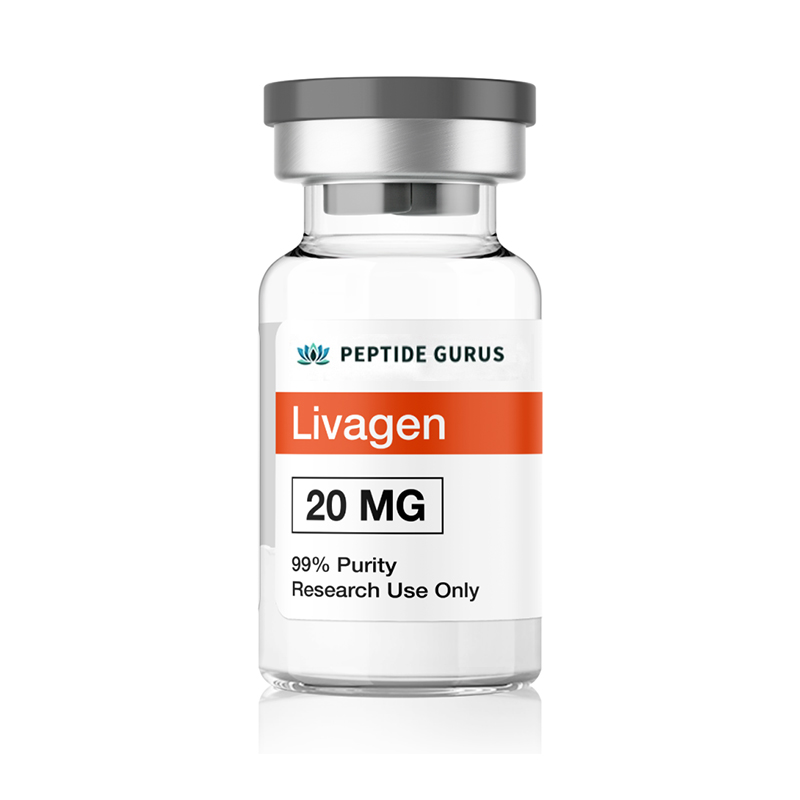
Livagen 20mg (Bioregulator)

$500.00
1000 in stock
🔥 Exclusive Crypto Offer
Get an INSTANT 15% DISCOUNT when you pay with Bitcoin, Ethereum, Dogecoin, Bitcoin Cash, XRP, Solana, or USDT.
⚡ Don't have crypto? Buy it here in 5 minutes with easy guidance.
💡 Pro Tip: You can also pay with cryptocurrency using your verified Cash App or PayPal account for a fast and secure checkout!
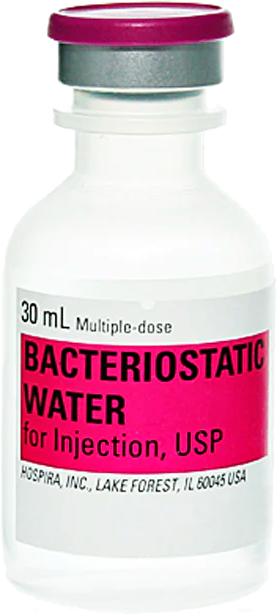
Free (1) 30 ml Bacteriostatic Water
with qualified orders over $500 USD. (excludes capsule products, cosmetic peptides, promo codes and shipping)
Livagen is a short bioregulatory peptide that has direct effects on DNA structure and function. It is best known for its ability to decondense chromatin, thereby increasing the expression of certain genes and improving the “youthful” profile of cells. Its most studied effects are on lymphocytes of the immune system. Through these cells, Livagen has been shown to activate the immune system and offset disease in the heart, GI tract, immune system, and central nervous system. Livagen research has also shown promise in the area of nociception and pain control. Ongoing research will help to further unravel the promise of Livagen and bring humanity closer to understanding the processes of aging and senescence. Product Usage: This PRODUCT IS INTENDED AS A RESEARCH CHEMICAL ONLY. This designation allows the use of research chemicals strictly for in vitro testing and laboratory experimentation only. All product information available on this website is for educational purposes only. Bodily introduction of any kind into humans or animals is strictly forbidden by law. This product should only be handled by licensed, qualified professionals. This product is not a drug, food, or cosmetic and may not be misbranded, misused or mislabled as a drug, food or cosmetic.
Livagen
Livagen, a short peptide closely related to Epitalon (aka Epithalon), is known for its effects on the immune system, GI tract, and liver. As a peptide bioregulator, Livagen has direct effects on DNA and gene expression patterns. Its purported anti-aging properties are thought to result from Livagen’s ability to activate genes in the GI tract and immune system that are otherwise silenced as a result of DNA condensation with age.
Livagen Structure
Amino Acid Sequence: Lys-Glu-Asp-Ala Molecular Formula: C18H31N5O9 Molecular Weight: 461.5 g/mol PubChem CID: 87919683 CAS No: 195875-84-4 (Deprecated: 402856-42-2) Alternative Names: SCHEMBL5967826 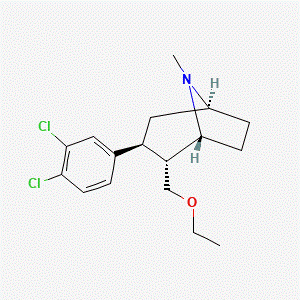
Livagen, Chromatin, and the Immune System
DNA is contained within the nucleus of eukaryotes, like humans, in a hierarchy of ever more condensed organization that takes the roughly 3 feet of DNA that is contained within a human cell and packages it to fit within the space of one hundredth of a millimeter. In other words, the packaging of DNA reduces its overall size by about 100,000 times. The double helix of DNA is wrapped around proteins, called histones, which themselves conglomerate to form chromatin structure, which further condenses to form chromosomes. This progressive organization of DNA serves several purposes including condensing the genetic material for replication and cell division, condensing the genetic material so that it fits within cells, and controlling expression of genes at a very high level. In other words, DNA organization is all about packaging the genetic material and about controlling access to specific genes[1]. The latter function of chromatin, controlling gene expression, 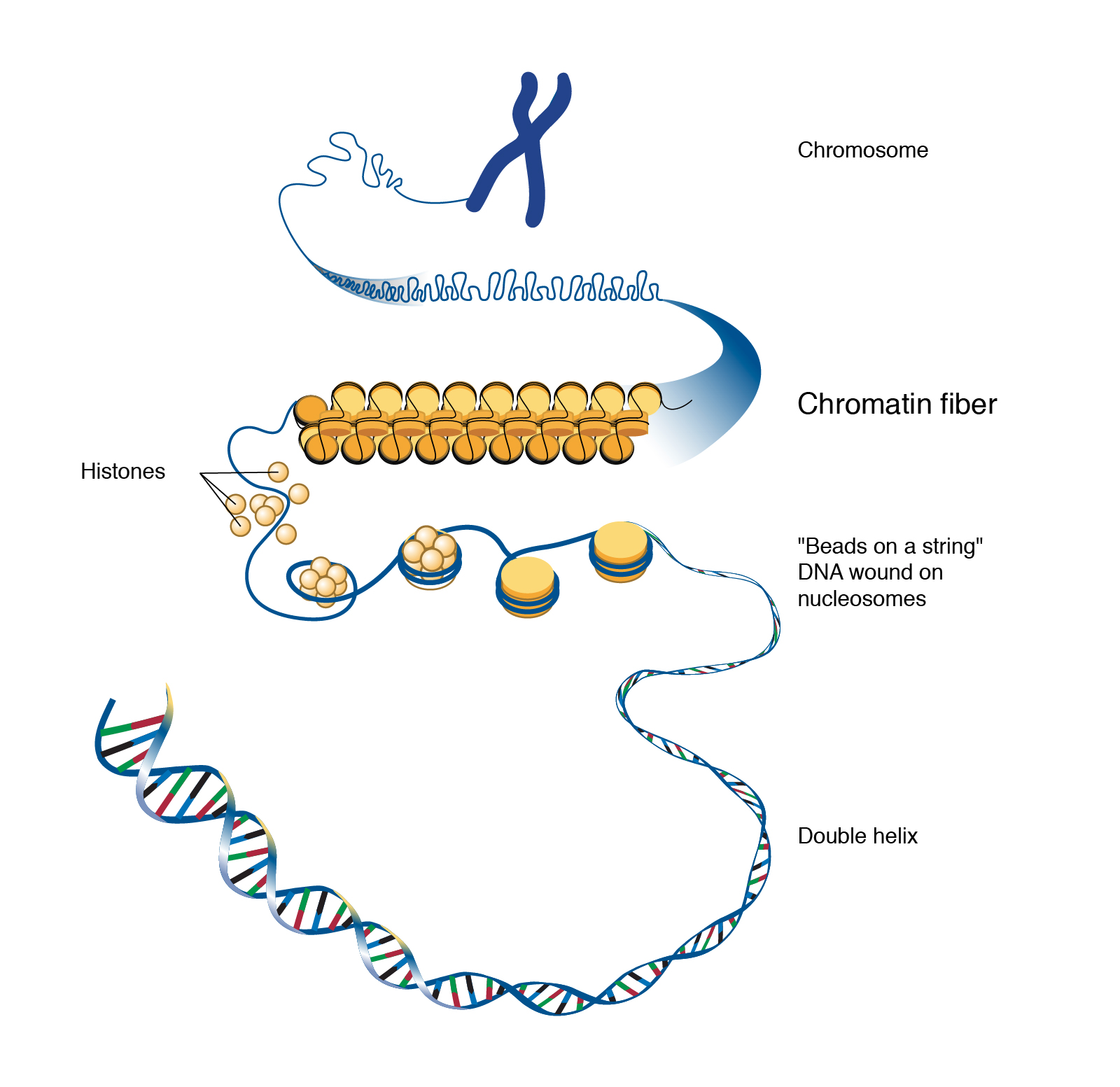
Livagen and the Heart
Lymphocytes play an active role in cardiac health, so it was natural for researchers to wonder what effects Livagen might have on the heart. Research in patients with hypertrophic cardiomyopathy (HCM) suggests that dysregulation of chromatin structure in lymphocytes is a pathogenic feature in HCM and atherosclerosis that, if correct, may improve long-term outcomes[5]. Several studies suggest that release of genes via decondensation of chromatin in lymphocytes may help to reduce long-term sequelae from various forms of heart disease[6]. Of course, this is precisely what Livagen does and so there has been a great deal of research in this area[7], [8]. Changes to lymphocyte gene expression may help to reduce inflammation and the scarring that it leads to in individuals with HCM. Livagen may also be useful for preventing the onset of HCM in those who are genetically predisposed to the condition as well as following heart attack or other cardiac injury. Livagen may provide the basis for advanced preventative strategies that will reduce the overall morbidity and mortality associated with heart disease.
Livagen and Pain
Enkephalins are short peptides that the body uses to signal pain. They bind to both mu and delta opioid receptors. Mu receptors, which bind morphine, cause a reduction in pain, blood pressure, and consciousness when activated. Delta receptor activation leads to reduced pain perception and may account for the respiratory depression seen with opiates. Work on bioregulatory peptides shows that Livagen inhibits the activity of enkephalin-degrading enzymes in the blood, thereby increasing levels of natural pain killers in the body[9]. Naturally, this suggests that Livagen may be an effective treatment for pain. There is ongoing research to determine how well it controls pain, what the side effects of enhanced enkephalin levels are, and whether there is any addictive potential as there is with opioids like Oxycontin.
Livagen and the GI Tract
New research suggests that both my and delta receptors, when activated, play an important role in protecting the mucosal barrier of the GI tract. The net result of Livagen in this setting is an increase vagal nerve signaling to the GI tract and altered levels of both mucosal nitric oxide and prostaglandins[10]. This leads to profound gastroprotection that may be useful in everything from treating infectious diarrhea to reducing the symptoms and long-term consequences of inflammatory bowel disease. Given its ability to enhanced activation of these receptors by enhancing levels of enkephalin in the bloodstream, it should come as no surprise that Livagen is being considered as a potential treatment for a variety of disorders of the GI tract.
Livagen and Aging
What should be obvious by now is that many of the effects of aging are a result of changes in the way DNA is organized and thus the types of genes that can be accessed and expressed. These changes have been detailed in research by the leading authority on chromatin changes in aging, Professor Teimuraz Lezhava. His work shows that levels chromosomal aberrations increase with age. These aberrations include progressive condensation of chromatin (think of this as increasing inactivation of DNA) and decreases in repair processes (secondary to the inactivation that arises from condensation)[11]. There is good evidence to suggest that reversing the process of condensation may, in fact, be an effective means of extending lifespan. After all, if silencing genes leads to progressively faster aging, reactivating those genes should slow the process. Dr. Lezhavas’s research shows that Livagen, Epitalon, and a handful of other bioregulatory peptides are already know to impact this process by decondensing DNA[12]. His work shows that there is good reason to believe that these peptides can, in fact, help to thwart some of the dysfunction that arises with age, particularly as it relates to immune dysregulation and decreased protein synthesis.
Livagen Summary
Livagen is a short bioregulatory peptide that has direct effects on DNA structure and function. It is best known for its ability to decondense chromatin, thereby increasing the expression of certain genes and improving the “youthful” profile of cells. Its most studied effects are on lymphocytes of the immune system. Through these cells, Livagen helps to activate the immune system and offset disease in the heart, GI tract, immune system, and central nervous system. Livagen even shows promise in the area of nociception and pain control. Ongoing research will help to further unravel the promise of Livagen and bring humanity closer to understanding the processes of aging and senescence. Livagen exhibits minimal side effects, low oral and excellent subcutaneous bioavailability in mice. Per kg dosage in mice does not scale to humans. Livagen for sale at Peptide Gurus is limited to educational and scientific research only, not for human consumption. Only buy Livagen if you are a licensed researcher.
Article Author
The above literature was researched, edited and organized by Dr. E. Logan, M.D. Dr. E. Logan holds a doctorate degree from Case Western Reserve University School of Medicine and a B.S. in molecular biology.
Scientific Journal Author

Referenced Citations
- “Chromatin,” Genome.gov. https://www.genome.gov/genetics-glossary/Chromatin (accessed Feb. 05, 2022).
- V. Kh. Khavinson et al., “Effects of Livagen Peptide on Chromatin Activation in Lymphocytes from Old People,” Bull. Exp. Biol. Med., vol. 134, no. 4, pp. 389–392, Oct. 2002, doi: 10.1023/A:1021924702103.
- T. Lezhava, J. Monaselidze, T. Kadotani, N. Dvalishvili, and T. Buadze, “Anti-aging peptide bioregulators induce reactivation of chromatin,” Georgian Med. News, no. 133, pp. 111–115, Apr. 2006.
- “Lymphocyte,” Genome.gov. https://www.genome.gov/genetics-glossary/Lymphocyte (accessed Feb. 05, 2022).
- T. A. Dzhokhadze, T. Z. Buadze, M. N. Gaiozishvili, N. G. Kakauridze, and T. A. Lezhava, “[Genomic instability in atherosclerosis],” Georgian Med. News, no. 236, pp. 82–86, Nov. 2014.
- T. Lezhava and T. Jokhadze, “Activation of pericentromeric and telomeric heterochromatin in cultured lymphocytes from old individuals,” Ann. N. Y. Acad. Sci., vol. 1100, pp. 387–399, Apr. 2007, doi: 10.1196/annals.1395.043.
- “[Effect of peptide bioregulator and cobalt ions on the activity of NORs and associations of acrocentric chromosomes in lymphocytes of patients with hypertrophic cardiomyopathy and their relatives],” Georgian Med. News, no. 234, pp. 134–137, Sep. 2014.
- T. A. Dzhokhadze, T. Z. Buadze, M. N. Gaĭozishvili, M. A. Rogava, and T. A. Lazhava, “[Functional regulation of genome with peptide bioregulators by hypertrophic cardiomyopathy (by patients and relatives)],” Georgian Med. News, no. 225, pp. 94–97, Dec. 2013.
- N. V. Kost, O. I. Sokolov, M. V. Gabaeva, I. A. Zolotarev, V. V. Malinin, and V. K. Khavinson, “[Effect of new peptide bioregulators livagen and epitalon on enkephalin-degrading enzymes in human serum],” Izv. Akad. Nauk. Ser. Biol., no. 4, pp. 427–429, Aug. 2003.
- K. Gyires and A. Z. Rónai, “Supraspinal delta- and mu-opioid receptors mediate gastric mucosal protection in the rat,” J. Pharmacol. Exp. Ther., vol. 297, no. 3, pp. 1010–1015, Jun. 2001.
- T. A. Lezhava, “[Human chromosome functional characteristics and aging],” Adv. Gerontol. Uspekhi Gerontol., vol. 8, pp. 34–43, 2001.
- V. K. Khavinson et al., “Peptide Epitalon activates chromatin at the old age,” Neuro Endocrinol. Lett., vol. 24, no. 5, pp. 329–333, Oct. 2003.
ALL ARTICLES AND PRODUCT INFORMATION PROVIDED ON THIS WEBSITE ARE FOR INFORMATIONAL AND EDUCATIONAL PURPOSES ONLY. The products offered on this website are furnished for in-vitro studies only. In-vitro studies (Latin: in glass) are performed outside of the body. These products are not medicines or drugs and have not been approved by the FDA to prevent, treat or cure any medical condition, ailment or disease. Bodily introduction of any kind into humans or animals is strictly forbidden by law.
Related products

Peptides

Peptides

Peptides

Peptides

Peptides
Peptides